








Košík
Váš košík je momentálne prázdny.
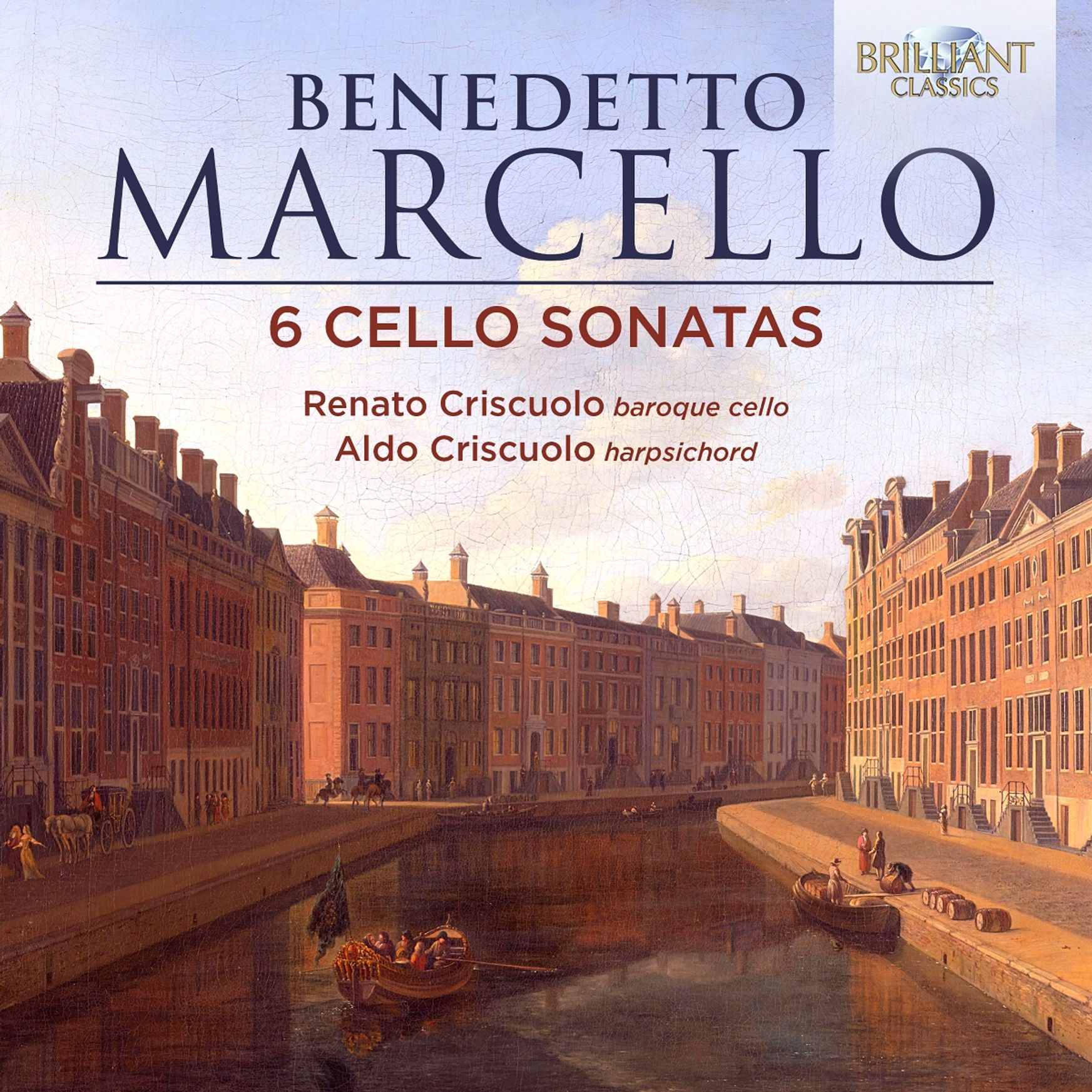
Marcello: 6 Cello Sonatas
14,00 €
Formát:
CD
Dostupnosť:
7-14 dní
Katalógové číslo:
97091
EAN kód:
5028421970912
Autori:
Benedetto Marcello
Interpreti:
Aldo Criscuolo, Renato Criscuolo
Vydavateľ:
BRILLIANT CLASSICS
Zoznam skladieb
Dátum vydania: 9. 5. 2025Sonata No.1 in F
1 I. Largo
2 II. Allegro
3 III. Largo
4 IV. Allegro
Sonata No.2 in E minor
5 I. Adagio
6 II. Allegro
7 III. Largo
8 IV. Andante
Sonata No.3 in A minor
9 I. Adagio
10 II. Allegro
11 III. Largo
12 IV. Allegro
Sonata No.4 in G minor
13 I. Adagio
14 II. Allegro
15 III. Largo
16 IV. Allegro
Sonata No.5 in C
17 I. Adagio
18 II. Allegro
19 III. Largo
20 IV. Allegro
Sonata No.6 in G
21 I. Adagio
22 II. Allegro
23 III. Grave
24 IV. Grave
Popis
There are two nearly identical sources for this collection of six sonatas for cello and basso continuo by the Venetian nobleman Benedetto Marcello (1686–1739). One is the London edition by I. Walsh, and the other is a Dutch edition with no publisher’s name given. The year of the Dutch publication and, in all likelihood, that of the English one, too, is 1732.
It is curious that the London edition is catalogued as Opus 2 (opera seconda) while the Amsterdam edition has Opus 1 (opera prima). B. Marcello’s Opus 2 is in fact usually identified with his most famous flute sonatas. This confusion over the opus numbers hints at ‘pirated’ publication, unauthorised by the composer, a practice to which the publisher Walsh, at least, was no stranger.
The publication of Benedetto Marcello’s Six Sonatas for cello and basso continuo by Walsh, who traded mostly in ‘commercial’ music for amateur players, suggests they were indeed composed specifically for non-professional performers, but the presence of the Fourth Sonata on the fifth-year syllabus of modern cello studies in Italy has sadly painted the entire collection with the brush of didactic music, such that recordings of the set on either modern or period instruments are rare. They have also long languished in the shadow of the roughly contemporaneous and more famous sonatas for cello and basso continuo by fellow-Venetian Antonio Vivaldi. Nevertheless B. Marcello’s sonatas take up good melodic cues, especially in the central Largos of the Third, Fourth and Sixth Sonatas, and Handelian echoes are clearly heard in the First. A very beautiful jig closes the Fourth Sonata – the only example of a dance in the collection. Walsh’s London edition indicates a basso continuo of harpsichord alone, and this recording complies, adapting the entire accompaniment to the keyboard instrument and eliminating melodic passages probably intended for a second cello. The slurs in the soloist’s part are interpreted more as expression markings than as bowings.
Finally, some instrumental introductions have been added to the slow movements, as was customary in the period. As this is a set of sonatas typical of the era of Les Goûts réunis (unified
national styles), Renato Criscuolo has juxtaposed Italian-style diminutions with a few embellishments typical of the French gambist repertoire. This blend would have sounded particularly familiar in a London that – while partial to Italian theatre – tended to embrace both great European schools. Prihlásenie
Newsletter


Copyright 2014-2026 © Hummel Music